


WeGO Launches New Smart City Index With Global Partners

Seoul, November 21st – WeGO has officially launched the Cities Future Readiness Index (CFRI), a comprehensive global benchmark analyzing 102 cities. The 2025 edition of the index was developed in partnership with the Descartes Institute and United Nations Economic Commission for Europe (UNECE)-University of Geneva (UNIGE) Center of Excellence for Smart Sustainable Cities.
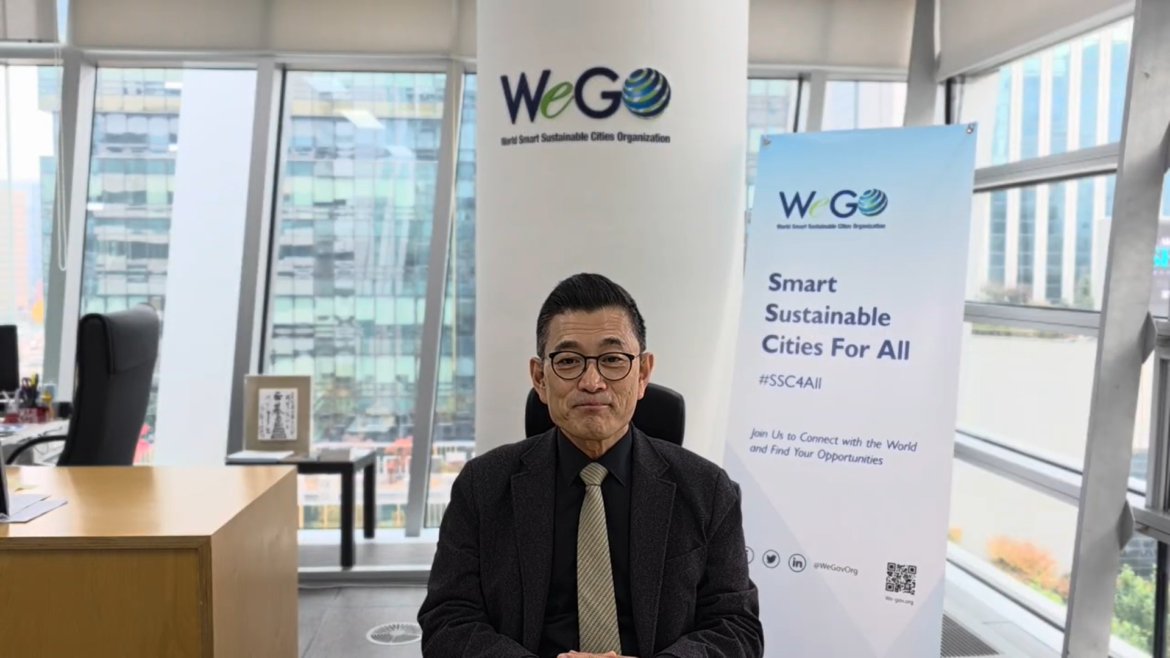
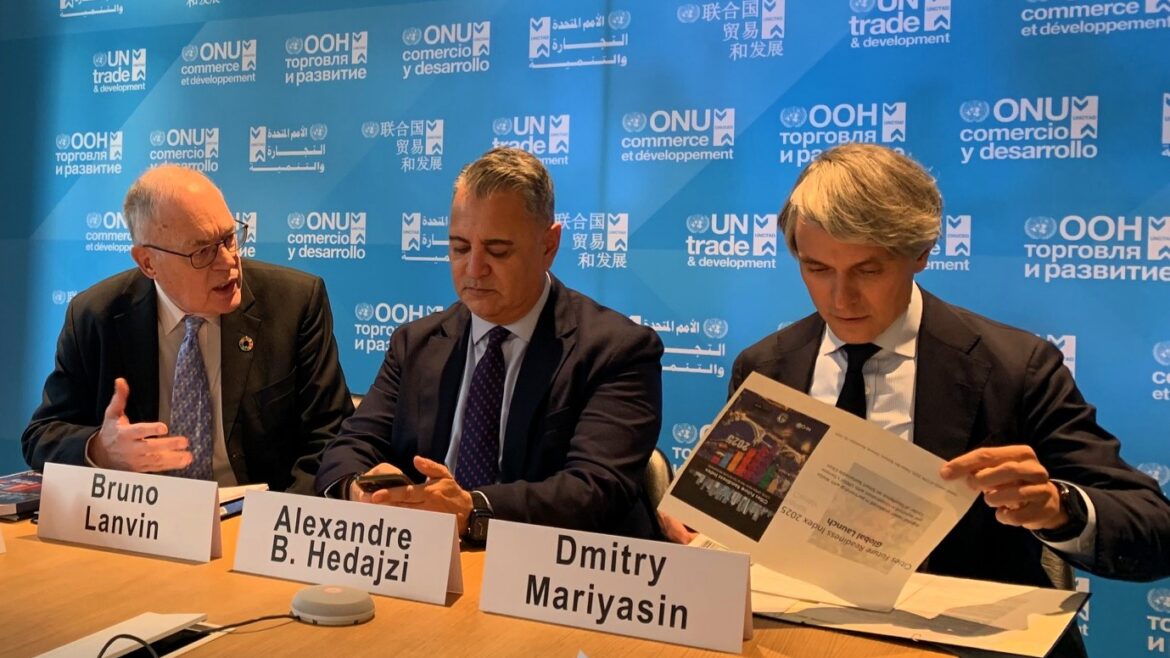
The index was unveiled at a hybrid launch ceremony at the Palais des Nations, UN Headquarters in Geneva, on November 18. During the event, WeGO Secretary-General Jeong-kee Kim highlighted the critical need for new metrics. “Cities are taking a central role in shaping our common future. To better steer and coordinate our efforts, we need better metrics,” said Mr. Kim. “Our collaboration on the CFRI aims to present urban decision-makers with both metrics and a vision that prioritize human-centric innovation when it comes to urban digital transformation.”
Bruno Lanvin, President of the Descartes Institute, echoed this sentiment. “Every day, new data becomes available to better describe the situation and dynamics of cities worldwide. Since our future will be mainly urban, assessing how our cities are prepared to face tomorrow’s challenges and seize the opportunities of the future is key to shaping the future as we want it to be.”

WeGO, a leading international organization of city governments and partners facilitating global public-private partnerships (PPPs) to build smart and sustainable cities, has been actively involved in smart city index development through institutional partnerships for the past two years. As cities confront unprecedented challenges, this experience highlighted the need for a more accurate and future-focused assessment of a city’s current state to chart its future course. To guide this urban digital transformation with human-centric innovation, the new CFRI was created in line with WeGO’s core mission, designed specifically to prioritize human-centric innovation.
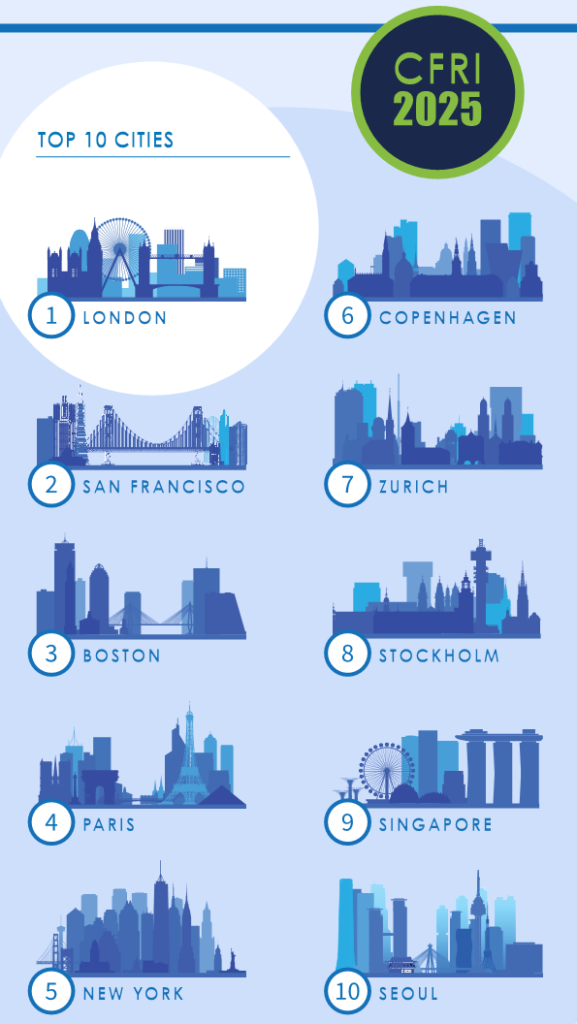
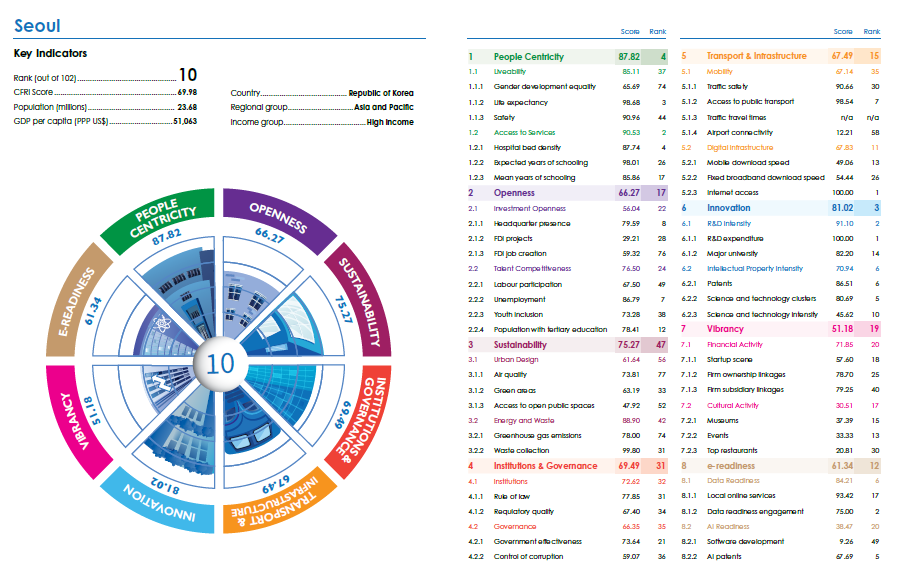
London has been named the world’s most future-ready city in 2025, recognized for its unique blend of financial dynamism, cultural vitality, and global reach. It is closely followed by San Francisco in second place, hailed as a global digital trailblazer, and Boston in third, renowned as a world-class research hub. The top 10 is rounded out by global hubs Paris (4th) and New York (5th); smart, sustainable European cities Copenhagen (6th), Zurich (7th), and Stockholm (8th); and Asian innovation leaders Singapore (9th) and Seoul (10th).
The 2025 Cities Future Readiness Index (CFRI) provides a comprehensive global benchmark, analyzing 102 cities across 75 countries, including 41 WeGO members. The index is notable for its extensive diversity, including cities of all sizes, from Geneva (600,000 inhabitants) to megacities like Tokyo (36 million). It also spans the full economic spectrum, from low-income to high-income nations and from an estimated GDP per capita of $4,500 in Dar es Salaam to $155,000 in San Francisco. Regionally, Asia and Pacific (32 cities) and Europe (29 cities) are the most represented in the study.
The CFRI distinguishes itself from other city assessment indices through its innovative, dual-structure approach. Developed by a globally recognized team, it overcomes the limitations of opinion-survey-based indices by utilizing readily available, hard city-level data. This method ensures independence, rigor, and adaptability as data quality and coverage evolve. The index aims to represent a diverse range of global cities, with a limit of approximately 100 cities to maintain credibility. Furthermore, it is designed as an actionable tool to better inform stakeholder decisions.
The CFRI distinguishes itself from other city assessment indices through its innovative, dual-structure approach. Developed by a globally recognized team, it overcomes the limitations of opinion-survey-based indices by utilizing readily available, hard city-level data. This method ensures independence, rigor, and adaptability as data quality and coverage evolve. The index aims to represent a diverse range of global cities, with a limit of approximately 100 cities to maintain credibility. Furthermore, it is designed as an actionable tool to better inform stakeholder decisions.
The CFRI is already being put into practice. Utilizing the index, WeGO and partners awarded the Index Special Mention as part of the Seoul Smart City Prize, to formally recognize efforts in smart city development. Aligning with the purpose of the Seoul Smart City Prize that aims to promote an innovative and inclusive smart city model, the Special Mention was awarded to Rabat.

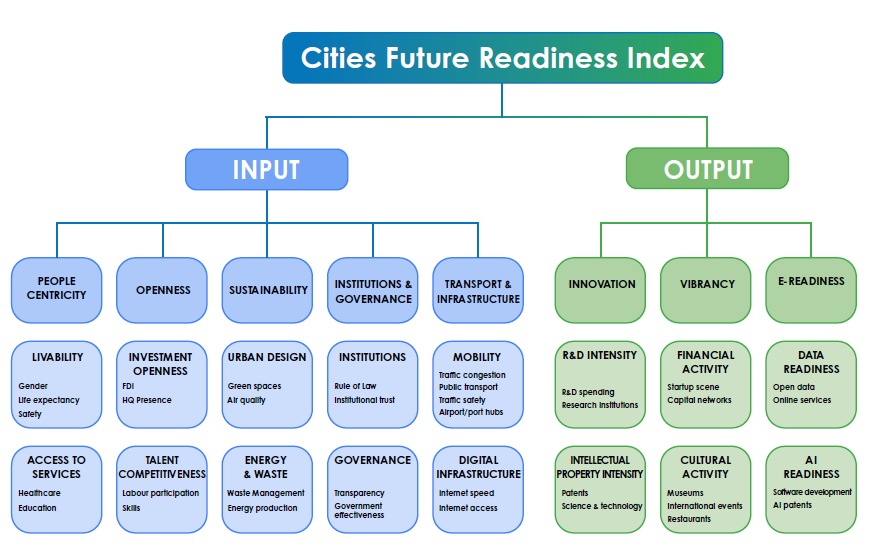
The CFRI offers a unique combination of seven important characteristics: hard data, reputation, rigorous independence, originality, adaptability, coverage and usability. For initials of the keywords used to name these eight pillars spell the word POSITIVE:
-
- People Centricity
- Openness
- Sustainability
- Institutions and Governance
- Transport and Infrastructure
- Innovation
- Vibrancy
- E-readiness
To ensure a holistic assessment, the POSITIVE model uses a precise, multi-layered framework built upon 44 distinct indicators, which are sourced from 32 quantitative data sets and 12 qualitative index data sets.
The report also highlights a “Metropolis Paradox.” While large, wealthy cities successfully leverage smart technologies to offset the diseconomies of scale—such as mobility and safety challenges—the report warns of a widening urban divide. This gap threatens densely populated cities in developing regions, underscoring the urgent need for technological innovation, particularly the deployment of AI, to accelerate progress in urban design and management.
Another distinguishing factor of the CFRI is that it defines cities not just as narrow, single administrative units but incorporates an understanding of cities also as larger metropolitan regions or major urban centers of strategic importance for better comparison of diverse urban systems.
In this era of rapid transition, the very definition of urban competitiveness is being reshaped. Consequently, city branding and global visibility have become crucial for those aspiring to an international role. The report also notes that talent strategies must evolve from simple attraction to facilitating “brain circulation,” while cities are increasingly building durable comparative advantages based on their unique history, culture, and experience.
CFRI will serve as a critical, actionable tool for urban leaders and policymakers worldwide. By providing a clear, data-driven benchmark, the index is expected to guide strategic planning, help cities identify key areas for improvement, and inform targeted investments in smart and sustainable solutions. Ultimately, WeGO expects the CFRI to empower cities to accelerate their digital transformation, fostering a global dialogue on best practices and ensuring they evolve into more human-centric, resilient, and inclusive environments for all citizens.
To check the most future-ready cities’ ranking by the Cities Future Readiness Index, please check the link here: Cities Future Readiness Index .
You can also check out the recent Foreign Policy Article covering the results and impacts of the Cities Future Readiness Index.
About WeGO
The World Smart Sustainable Cities Organization (WeGO), is a membership-based international association of local governments, smart tech solution providers, and institutions committed to the transformation of cities into smart sustainable cities through facilitating public-private partnerships (PPP). WeGO was founded by 50 member cities in 2010 as the World e-Governments Organization, hence our acronym. In response to the evolving concept of smart cities, WeGO expanded its vision and mandate at the 4th General Assembly (2017) and its name to the World Smart Sustainable Cities Organization. WeGO’s Secretariat is based in Seoul, Korea, and has regional offices in East Asia (Chengdu, China), Africa (Abuja, Nigeria), Middle East & North Africa (Abu Dhabi, United Arab Emirates), Latin America (Cuenca, Ecuador), and Central Asia (Almaty, Kazakhstan). As the leading platform on smart city development, WeGO’s mission is to share knowledge and good practices in e-Governance; strengthen administrative efficiency and transparency; advance digital capacity; facilitate civic involvement; bridge the digital divide and inequality; and promote cooperation solidarity among cities and local governments around the world.
WeGO serves for its members as their international platform to improve the quality of life, innovate in the delivery of public services, and strengthen regional competitiveness.
Press Contact:
Name: Junho Jeong
E-mail: j.jeong@we-gov.org
Phone: +82-70-4202-9169